
We finally made it to finale week of module one. Frankly, the time has flown by.
I have completed my personal case study video, looking back over my progress, biggest lessons learned so far and next areas of focus. It took a long time to crystallise and sort through all of the learnings; I had so much to reflect on.
This week, alongside this work I will share some of my other discoveries and critical learning incidents that have been significant.
On intention…
The concept of intention is something that is starting to permeate the rest of my life beyond my studies. I have become more focussed on finding the things that bring me joy, challenge and fulfilment and then doing them purposefully. It is natural to want to seek what is known and comfortable, but during this first module I have needed to push away from this in order to grow.
In my first rapid ideation sprint it was focussing time on game art as opposed to code – the area in which I really needed to develop. To focus my time intentionally, in the second sprint I spent the entire time in Unity focussing solely on the mechanics and code, with support from a technical mentor that I acquired through my developing professional community of practice. This relationship has proved both a valuable sounding board and a critical eye on my work.
On innovation…
As I mention in my video, success in video games is intrinsically linked to innovation. Since learning about the MDA Framework (Hunicke et al 2001) and The Elemental Tetrad (Schell 2008), i’ve realised that the most groundbreaking games innovate in more than one area, and sometimes all; a tall order indeed. Personal favourites such as Doom, Super Mario Brothers or Tetris are great examples of where I can see innovation happening across multiple areas. Innovation in technology or even production can have a huge impact on a title’s chances of success. For example, innovation in the Software Development Life Cycle (SDLC) itself can contribute to development of a truly great game. When I was conducting research on DevOps I learned that implementation of a DevOps pipeline – a relatively new concept – has been proven to increase productivity (Harvey et al 2021) allowing a team to get through production cycles much more quickly. Although it may be challenging while I am developing fundamental skills, I will seek to find small innovations wherever I can in my own work.
On developing my interpersonal reflective domain…
The Interpersonal domain is one of my areas of focus for the next module. As a first step to improvement, I have joined a community of practice – a graphics club which meets virtually to review and discuss a game.
Looking ahead to the next module, I’m both excited and nervous at the prospect of collaboration on a project. In order to continue to develop my practical development skills, I hope to work in partnership with someone who is more proficient on the technical side than I am. In return, I hope to offer my experience in business, product development and startups. A challenge I foresee is my demanding work schedule. I will need to develop new ways of working that will allow for the schedules of others.
As I progress through the course and my career, participating in games industry communities that may have established thinking or practice, I will ensure I critique them and not ignore my own ideas and experience. I will also continue to reflect on my own decisions in the communities where I have influence and ensure I remain open to the critique of others.
On my ‘Just in Time’ learning strategy…
First developed in a manufacturing context in the 1970’s, ‘Just In Time (JIT)’ is an approach now applied to software development in Agile and other disciplines such as process management and teaching. In all contexts, JIT mandates that just the right resource be provided to the right people, just at the right time (Aoyama 1998).
Following this approach is something that has become critical in managing my time alongside my job. It has helped to minimise waste time and focus my learning on specific outcomes. However, it is not a perfect system. Learning limited to the specific skills I need to build a game target made it challenging to deal with the unexpected – unexpected behaviour in code and then debugging. It required me to research using forums and documentation, often working through solutions that took time to understand. It felt a bit like only learning enough of a language to order a coffee and then having to work out what was happening when the barista responds with something I didn’t expect!
On developing my skills…
To continue to build my technical skills, I would like to create a game in 3D and a second that focuses on dialogue and narrative mechanics; although I realise this may not be possible in a collaborative project.
I have always had a love of pixel art and have identified some tutorials by Derek Yu that I would like to try. I’’d like to use what I learn to try a challenge from our module leader of scaling down some of my existing artwork, with the goal of making it read as intended with minimal pixels.
:format(webp)/cdn.vox-cdn.com/uploads/chorus_image/image/32677635/Wilson-and-Birds.0.png)
I have also purchased a tablet to develop more of a hand-drawn art style. I am inspired by the art of games like Klei Entertainment’s ‘Don’t Starve Together’ and ‘Cuphead’ and would love to implement something this into a future project.
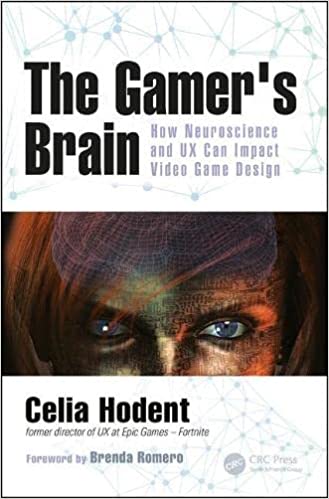
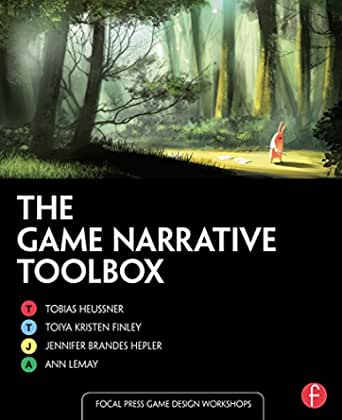
I have read some excellent books and case studies over the course of the module. Each time I feel as though my ability to stand on the shoulders of giants has taken a leap forward. I have identified the next two I would like to read to continue my research into the science of game design and narrative.
I have also started looking for more real-world case studies to learn from and apply my developing theoretical learnings to. Youtube has proven to be a great place for this where I have been watching talks from the GDC archives.
On personal challenges…
Admittedly, I’ve become somewhat of a hermit. Work and study have become the centre of my universe, often spending 12 hours a day in front of a computer. There is not much I can do about this (it’s what I signed up for!) but I realise that this is not sustainable in the long term and will not continue to work in this way past the end of the course. I am taking whatever free time that I have to play sport, D&D or video games; the things that help me get into the present and practice mindfulness.
Another obstacle that i’ve experienced is microaggressions. Although there has been much progress, as a woman in the industry i’m still a relative outsider; especially in production and technical disciplines. Something as seemingly trivial as watching a GDC talk where the speaker repeatedly refers to the player or developer as “he”, or a lack of representation in a list of ‘The Greatest Game Designers’ has compounded for me over time and on occasion, i’ve found myself becoming very angry. I don’t feel comfortable to reference these talks here either, which I think speaks to the impact that this creates. I spend a lot of time professionally espousing the value of difference, and diversity being key to business success. When I feel frustrated I try remind myself of this advantage my position brings and use my emotion as motivation to succeed.
Video Transcript
Creativity is imagining what doesn’t already exist. Applied Creativity is identifying the destination for the imagination and then charting a map to get there.
I joined the Indie Game Development programme to learn how to make great games, improve my professional skill set and expand my career options. I started with these personal goals (refer to video) and over my first twelve weeks of study I have started to chart the map of my own practice. In this video I will share my biggest lessons learned and the critical incidents that got me there.
This first learning was sparked when I was researching scientific cognitive theories in relation to knowledge formation and creativity. Seeing the impacts of Reflexivity (Fook and Gardner 2007), Perceptual Sets (Weiten 2017: 121) and perceptual phenomena like Prägnanz (Dresp-Langley 2015) or – Inattention Blindness (Chabris and Simons 2010) first hand, became a critical incident.
I’d always considered myself to be a naturally creative thinker, so learning that my brain could be impeding my creativity was revolutionary for me.
In response, I started using techniques like ‘SCAMPER’ (Dam et al 2020), ‘Mash-up’ (Ideo 2015) and ‘Opposite Thinking’ (Board of Innovation 2021) to push my brain into new ways of doing things. I used the ‘reflective approach to theory and practice’ (Fook and Gardner 2007: 23) to challenge my own assumptions and those of others.
The value was immediately clear. For example, in our first Rapid Ideation sprint, I applied ‘Opposite Thinking’ to create a game narrative, generating ideas I never would have had otherwise.
When I learned that disruptive thinking is core to making great and successful games (Ainamo 2018), my confidence was challenged. In a knowledge economy like the games industry there’s so much knowledge required to be able to really interrogate the status quo (Edmunson 2012). It made me realise how far I have to go in order to be able to truly innovate at the level of the world’s best game makers – which is ultimately where I want to be (no pressure).
My first Rapid Ideation sprint was focussed on game design and the second on developing skills in Unity and game code. In the first, I used the MDA (Hunicke et al 2004) framework to structure the design, focussing on the aesthetics and narrative.
I wanted my game, Mega Knights, to be played by parents and children together, so I sought to differ the essential experience (Schell 2008) through the layers of narrative; considering how the story will be told by the game vs the narrative created by the player themselves (Ralph and Monu 2021).
I created my own assets and then started building in Unity. I struggled with the learning curve in the timeframe. Time estimation was also challenging and I overstretched myself with my plan. I was resolved to improve.
In the second Rapid Ideation sprint I addressed these challenges by referring back to the lean approach to product development – and creating a list of minimum project deliverables (Ries 2004). I reused my assets and adapted a targeted learning pathway so I could focus on getting to grips with Unity and maximise my time in code. The results were much better. I even managed to start on my stretch goals and apply some higher order thinking skills (Anderson et al 2001) – evaluating, analysing and applying my theoretical learning to create something new. I was proud.
As I considered how I would apply Agile in my own practice with professional peers, I heard some avid support for it, alongside an equally passionate rejection of Waterfall. In my second sprint, I worked in a blended waterfall-agile methodology. Using learning gained from both schools of thought helped me to tackle the classic time constraint and scope creep challenges (Glass 2001).
The most successful practices are constantly negotiated by the community and aren’t rigid (Wenger-Trayner 2014). Those that happen in silo may agree more, but actually achieve less (Webber 2016 and Ainamo et al 2018). So my next lesson learned was that it is not enough to find the giants and stand alongside them. I must find my own way to stand on their shoulders.
Aside from the rejection of the idea that there is ever one best approach for all development situations, I also came to realise a growing alignment to Newton’s expression and the respect it should command.
‘Nothing is completely original’ (Kleon 2012:7). Knowledge, Art and technology, everything new is referential and derivative. It is easy to discard earlier thinking, but there is far more value in taking time to see what can be built on it.
So! Armed with my new learning, I have refined my goals to make them SMART (Doran 1981) and have considered the steps I will take next to achieve them.
Expand my Interpersonal Reflective Practice
I have identified this domain as a weaker area of my practice. The combination of distance-learning and time pressures of work have meant that I have leant most heavily on my professional network and less on my student peers. This is something I intend to address.
Focussed, intentional, intensive working
For my next development project, I’ll continue to apply Pomodoro and Just-In-Time learning; replicating my strategy of learning pathway remediation for a different game type. These approaches have allowed me to minimise waste time and maintain concentration and motivation for longer.
Implement Games User Research (GUR)
I’m excited to implement user testing into my practice in order to bring my next game closer to my design vision and give it a better chance of success. Linked to this, there is great potential to improve the value, feasibility, and depth of GUR by augmenting it with Artificial Intelligence (Stahlke and Mirza-Babei 2018: 16). Here, the issue of bias is a particularly fascinating one, with studies proving that algorithms can and already do discriminate (Bolukbasi et al., 2016; Caliskan et al., 2017). As a woman in technology, the concept of “coded gaze” (Buolamwini 2016) is something that is both concerning and meaningful for me. I intend to learn about Unity’s ML Agents package to understand how I might use AI myself alongside reading more of Joy Buolamwini’s research.
REFERENCES
AINAMO Antti, Claudio DELL’ERA and Roberto VERGANTI. 2021. ‘Radical circles and visionary innovation: Angry Birds and the transformation of video games’. Creativity and Innovation Management: 30 (3) 439–454. Wiley.
ANDERSON, Lorin, David KRATHWOHL, Peter AIRASIAN, Kathleen CRUIKSHANK, Richard MAYER, Paul PINTRICH, James RATHS, and Merlin WITTROCK. 2001. A taxonomy for learning, teaching, and assessing: A revision of Bloom’s taxonomy of educational objectives. New York: Longman
BOARD OF INNOVATION. 2021. ‘Opposite Thinking’. Board of Innovation September 2021. Available at: https://www.boardofinnovation.com/tools/opposite-thinking/ [accessed 27th September 2021].
BOLUKBASI, Tolga, Kai-Wei CHANG, James Y ZOU, Venkatesh SALIGRAMA, and Adam T KALAI. 2016. Man is to computer programmer as woman is to homemaker? debiasing word embeddings. Advances in Neural Information Processing Systems 29, Curran Associates. Available at: http://papers.nips.cc/paper/6228-man-is-to-computer-programmer-as-woman-is-to-homemaker-debiasing-word-embeddings.pdf. [accessed 23rd December 2021]
BUOLAMWINI, Joy and Timnit GEBRU. 2018. Gender Shades: Intersectional Accuracy Disparities in Commercial Gender Classification. [online] Available at: http://www.thetalkingmachines.com/sites/default/files/2019-01/buolamwini18a.pdf [accessed 23rd December 2021]
BUOLAMWINI, Joy. 2016. ‘The coded gaze: Unmasking algorithmic bias’. YouTube [online. Available at: https://www. youtube. com/watch [accessed 23rd December 2021].
CALISKAN, Aylin, Joanna J BRYSON, and Arvind NARAYANAN. 2017. ‘Semantics derived automatically from language corpora contain human-like biases.’ Science, vol. 356, no. 6334, pp. 183-186. [online] Available at: https://doi.org/10.1126/science.aal4230 [Accessed 23rd December 2021]
CIRILLO, Francesco. 2007. The Pomodoro Technique [online]. Available at: https://www.amazon.co.uk/Pomodoro-Technique-Francesco-Cirillo/dp/1445219948 [Accessed 26th December 2021]
DAM, Friis Riike Friis and TEO Yu Siang. 2020. ‘Learn How to Use the Best Ideation Methods: SCAMPER’. Interaction Design September 2021. Available at: https://www.interaction-design.org/literature/article/learn-how-to-use-the-best-ideation-methods-scamper [accessed 27th September 2021].
DORAN, George. T. 1981. “There’s a S.M.A.R.T. Way to Write Management’s Goals and Objectives”, Management Review, 70(11), 35-36. [online] Available at: https://community.mis.temple.edu/mis0855002fall2015/files/2015/10/S.M.A.R.T-Way-Management-Review.pdf [accessed 23rd December 2021]
DRESP-LANGLEY, Birgitta. 2015. ‘Principles of perceptual grouping: Implications for image-guided surgery’. Frontiers in Psychology [online]. Available at: https://www.frontiersin.org/articles/10.3389/fpsyg.2015.01565/full [Accessed 1st January 2022].
EDMUNSON, Amy C. 2012. Teaming. How Organizations Learn, Innovate and Compete in the Knowledge Economy. Wiley.
FOOK, Jan and Fiona GARDNER. 2007. Practising Critical Reflection: A Resource Handbook. Maidenhead: Open University Press.
GLASS, Robert. 2001. ‘Agile v Traditional: Make Love, Not War!’ Cutter IT Journal. 14 (12) 12-18. [online]. Available at: https://citeseerx.ist.psu.edu/viewdoc/download?doi=10.1.1.456.6524&rep=rep1&type=pdf [accessed 18th December 2021]
HARVEY, Nathen, Michelle IRVINE, Dustin SMITH, Dave STANKE and Daniella VILLALBA. 2021. ‘Accelerate State of DevOps 2021.’ DevOps Research and Assessment (DORA) and Google Cloud. [online]. Available at: https://services.google.com/fh/files/misc/state-of-devops-2021.pdf
HUNICKE, Robin, LEBLANC Marc and ZUBEK, Robert. A Formal Approach to Game Design and Game Research Available at cs.northwestern.edu/~hunicke/pubs/MDA.pdf(opens in a new tab) [accessed 13/10/21]
IDEO 2015. ‘Ideation Method: Mash-up’. IDEO [online]. Available at: https://www.ideou.com/pages/ideation-method-mash-up [accessed 27th September 2021].
KLEON, Austin. 2012. Steal Like an Artist. New York: Workman Publishing.
POPPENDICK, Mary and Tom POPPENDICK. 2003. Lean Software Development: An Agile Toolkit. New York: Pearson Education.
RALPH, Paul and Kafui MONU. 2014. ‘A Working Theory of Game Design: Mechanics, Technology, Dynamics, Aesthetics and Narratives.’ First Person Scholar [online]. Available at: http://www.firstpersonscholar.com/a-working-theory-of-game-design/ [accessed 13th October 2021]
RIES, Eric. 2011. The Lean Startup. New York: Penguin Random House
SCHELL, Jesse. 2008. The Art of Game Design: A book of lenses. Burlington MA: Morgan Kaufmann Publishers
SCHMIDT CAMPBELL, Mary. 2021. ‘Unity 2030’ [introductory address]. Employee Conference. [online] 9th December 2021.
STAHLKE, Samantha N and Pejman MIRZA-BABAEI. 2018. ‘Usertesting Without the User: Opportunities and Challenges of an AI-Driven Approach in Games User Research.’ Computers in Entertainment. 16 (2) 1-18. New York: Association for Computing Machinery.
WEBBER, Emily. 2016. Building Successful Communities of Practice. Tacit.
WEITEN, Wayne. 2017. Psychology Themes and Variations. Cengage.
WENGER-TRAYNER Etienne. UDOL Academic Conference 2014 – Communities of Practice: Theories and Current Thinking. Youtube [online]. Available at: https://www.youtube.com/watch?v=71xF7HTEipo [Accessed 2nd January 2022].
CHO, F, K. KUSUNOKI Y SUGIMORI and S. UCHIKAWA. 1977. ‘Toyota production system and Kanban system Materialization of just-in-time and respect-for-human system’. The International Journal of Production Research, 15:6, 553-564. Taylor and Francis Ltd.
Full list of figures
Figure 1. Personal Case Study Video [produced by the author]. Youtube [online]. Available at: https://youtu.be/23-sOYgfEok
Figure 2: KLEI Entertainment. 2016. Don’t Starve Together [screenshot from video game]. Polygon [online]. Available at: https://cdn.vox-cdn.com/thumbor/T5WgAvPYj6Gx1k4tuWXlh9gKbKE=/34×0:1066×688/1520×1013/filters:focal(34×0:1066×688):format(webp)/cdn.vox-cdn.com/uploads/chorus_image/image/32677635/Wilson-and-Birds.0.png [Accessed 29th December 2021]
Figure 3. Celia HODENT. 2018. The Gamer’s Brain. How Neuroscience and UX Can Impact Video Game Design [screenshot of book cover].
Figure 4. Jennifer BRANDES HEPLER, Toiya FINLEY, Tobias HEUSSNER and Ann LEMAY. 2018. The Game Narrative Toolbox [screenshot of book cover].
 morwennagriffin.com
You must be logged in to post a comment.