
Our second Rapid Ideation sprint was focussed on the theme of Re-make, Re-model.
After some discussion with my tutors, I decided to re-make my artefact from the first rapid ideation sprint in Unity. I took the approach of a small ‘hurting’ project in order to start learning to use a new tool and support the following course goals without it being a massive undertaking:
- To develop enough independent development skills to make a game and understand how it works.
- To begin to build a portfolio of industry work.
In order to apply my learnings from the last rapid ideation sprint around creation of a Minimum Viable Product (MVP) and focussing my time intentionally, I decided that I specifically wanted to focus on building of practical skills and code.
I reused my assets, focussed on a single level and referred back to ‘The Lean Startup’ approach to product development (Ries 2004) to create a minimal list of project deliverables:
- An animated player movement system
- A player health system
- An animated enemy that patrols and deals basic melee damage
Although there were a number of other things that I felt would add to the player experience, I split these out into stretch goals.
- An animated sidekick character that follows the player
- A player attack system
- An animated static enemy that deals damage with a ranged attack
- Start and End Screen
In order to work in a disciplined way I took the approach of adapting a series of Unity tutorials (Pandemonium Games 2021) across a set number of hours on weekdays and at the weekend. I worked in this way so I could ensure I spent an adequate amount of time on the project without overworking on top of my day job. This approach worked really well for me and I managed to maintain my motivation throughout.
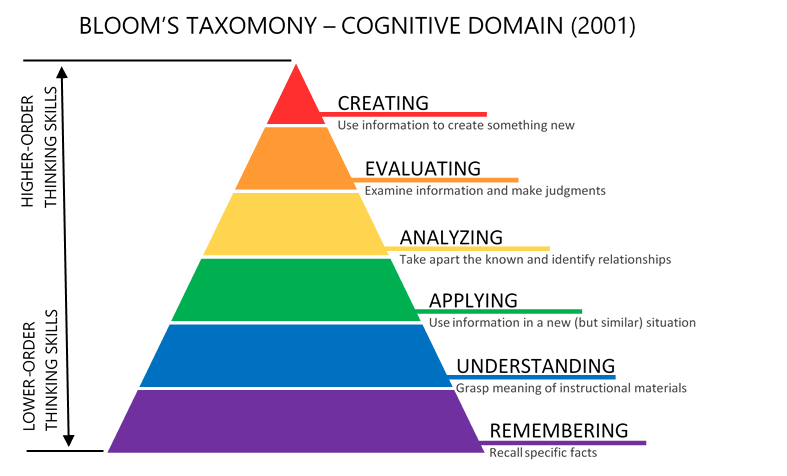
The work itself was slow but really enjoyable. It was a motivating affirmation of my choice to join the course. Although I was following tutorials I worked to adapt learnings and started solving my own problems searching forums and documentation online. I wrote the code very slowly and tried to work through what each piece was doing as I wrote it. I avoided copying and pasting anything to give myself the best chance of retaining the information and started trying to remix and apply different pieces of scripts to different GameObjects, referring to Bloom’s Taxonomy to assess the progress of my learning and work towards some higher-order thinking skills. (Anderson and Krathwohl, 2001). Although what i’m writing is currently basic in nature it felt like great progress.
Project planning was a challenge I faced again in this sprint. Despite setting core goals and stretch goals, I had expected to get through them both. However, the process of learning by making meant that again I was unable to accurately assess how long things would take. In this way, I actually found some success in the change to my method – erring on the side of caution and stripping my MVP further than I felt I needed to meant that I did not experience feelings of frustration or disappointment when I did not manage to complete what was on my extended list. Boiling down my MVP to the absolute minimum meant that this time I focussed on the most important elements and completed them.
In terms of my interactions with others, during this sprint I joined a Discord server of my course peers. I shared some thoughts and feelings about my time management challenges and found it reassuring to hear about the difficulties others were also facing. I also discussed my project at our weekly webinar and the feedback I received helped to shape my approach this time around. During the next piece of project work I will look to better build on my network in this group and seek feedback earlier in my development process.
I gained some great learnings during this rapid ideation sprint. Alongside, I have been reading The Art of Game Design: A Book of Lenses by Jesse Schell, which has aided me in making my reflections.
My technical study and application covered;
- Unity setup
- Scene setup
- Scripting
- Player movement – running and jumping
- Health system – also including creating some UI and pickups
- Enemy patrolling and dealing contact damage
- Graphics – scenes, sprites, using the animator and creating animations
- Camera movement
- Basic audio and triggered SFX
Working to develop these skills created a range of feelings and emotions during this task – particularly around the scripting elements. When something didn’t work as I expected, I immediately felt very frustrated. However, whenever I was able to debug a problem myself using resources online, I felt a great satisfaction and joy.
Another reflection I have made, is that with such a short timeframe in which to develop I was very reliant on my own sense of what is right and fun. For the purposes of speed, this felt appropriate, but I must acknowledge that I have been working based on my own assumptions and biases about what will serve the experience.
Schell notes that on the one hand:
‘By deeply listening to your own self, that is observing, evaluating and describing your own experiences, you can make rapid, decisive judgements about what is and what is not working in your game, and why it is or is not working’
(2008: 15)
On the other hand, they note that decision-making based on introspection alone can lead to challenges such as false conclusions about reality and subjectivity around quality and good-ness (2008: 16). Whilst as a designer, listening to your inner voice is critical, these are pitfalls that I will undoubtedly need to create strategies to mitigate as i head into more complex projects.
One such strategy would be to develop using the Agile framework. Specifically, to seek stakeholder feedback earlier in the process as described in the twelve principles of Agile software development by Beck et al in “Principles behind the Agile manifesto” (2001).
As I have been following and adapting an existing learning pathway, in this sprint I used a more traditional Waterfall model approach (Royce, 1970) alongside a basic Kanban board. In future I will aim to make incremental improvements to the core game mechanics using feedback and hone my game using Schell’s “The Lens of Essential Experience”; creating small pieces of gameplay and then user testing them will allow me to work towards creating a stripped back MVP that delivers on the essential experience (2008: 21).
I would also like to better define and innovate on the core aspects of fun. At the moment I have some foundational elements that I believe are fun because they are based on the tried and tested mechanics of the Platform genre. In our weeks learning about creativity, we discussed the concept that successful games are rooted in innovation and disruptive thinking. So much so, that newness – both in technology and design – have come to be a player expectation (Beattie 2021) and therefore a requirement of the designer.
“Have a goal and crazy ambition … look at the games market, many … fantastic games, but you never hear of them … do things differently … do not be afraid of going into new areas … you have to be a bit crazy … Think different!… Act now!.. Just Do it!… Think big!… Change the world! It’s not a job, it has to be more! The first rule is that there are no rules.”
(Ainamo et al 2021 : 8-9)
I have ideas for projects that I believe are innovative, in some way but at the moment my skills are too limited to create them. In order to meet this requirement for success, I will need to seek ways to innovate that I am capable of delivering or find others with complementary skillsets that I can work alongside.
To practice for the end of module assignment, this week I decided to create a video to sit alongside this journal entry.
References
AINAMO Antti, Claudio DELL’ERA and Roberto VERGANTI. 2021. ‘Radical circles and visionary innovation: Radical circles and visionary innovation: Angry Birds and the transformation of video games’. Creativity and Innovation Management: 30 (3) 439–454. Wiley.
ANDERSON, Lorin, David KRATHWOHL, Peter AIRASIAN, Kathleen CRUIKSHANK, Richard MAYER, Paul PINTRICH, James RATHS, and Merlin WITTROCK. 2001. A taxonomy for learning, teaching, and assessing: A revision of Bloom’s taxonomy of educational objectives. New York: Longman
BEATTIE, Andrew. ‘How the Video Game Industry is Changing.’ Investopedia [online]. Available at: https://www.investopedia.com/articles/investing/053115/how-video-game-industry-changing.asp [accessed 20th November 2021]
BECK, Kent, Mike BEEDLE, Arie van BENNEKUM, Alistair COCKBURN, Ward CUNNINGHAM, Martin FOWLER, James GRENNING, Jim HIGHSMITH, Andrew HUNT, Ron JEFFRIES, Jon KERN, Brian MARICK. Robert C. MARTIN, Steve MELLOR, Ken SCHWARBER, Jeff SUTHERLAND, Dave THOMAS. 2001. Manifesto for Agile Software Development. [online] Agilemanifesto.org. Available at: http://www.agilemanifesto.org/ [accessed 20th November 2021].
PANDEMONIUM GAMES. 2021. ‘Unity 2D Platformer for Complete Beginners’ [Tutorial Series]. Youtube [online]. Available at: https://www.youtube.com/playlist?list=PLgOEwFbvGm5o8hayFB6skAfa8Z-mw4dPV [accessed 12th November 2021]
RIES, Eric. 2011. The Lean Startup. New York: Penguin Random House
SCHELL, Jesse. 2008. The Art of Game Design: A book of lenses. Burlington MA: Morgan Kaufmann Publishers
Full list of figures
Figure 1: Serhat KURT. 2020. Bloom’s Taxonomy [online] Available at: Educationaltechnology.net: https://educationaltechnology.net/blooms-taxonomy/ [accessed 21st November 2021].
Figure 2: Rapid Ideation #2: Mega Knights. 2021. Video by the author.
 morwennagriffin.com
You must be logged in to post a comment.