
This week’s task was focussed on remediation of another artist’s artefact. In this context, we use the term to describe the concept that ideas in media are built on one another and everything is derivative to some extent. Grusin and Bolter define this framework in their book, Remediation: Understanding New Media (1999).
The task brief was to select one or two prototyping methods and build quick representations of the chosen artefact.
When thinking about content for the task, I decided to select something which held meaning for me. As a female – and one working in the technology industry at that – I am acutely aware of how I have benefitted from the work of others who have beaten a path towards gender equality throughout history. I aspire to be a change maker in my career one day and so decided to use an artefact created by an activist from another generation. I searched for a piece of poetry to adapt and eventually settled on one by Alice Duer Miller; whose work is considered influential to the advancement of women’s suffrage.
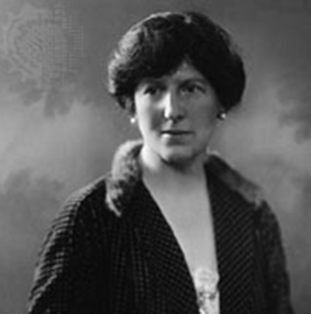
Miller’s poem, A Suggested Campaign Song was written in response to a comment made in an anti-suffrage speech proposing: ‘No brass bands. No speeches. Instead a still, silent, effective influence’ (1915). A copy of the full text can be found here.
My goal was to create something that honoured the poem and supported Miller’s original intention.
After reading the course references this week, there were two techniques that I found particularly interesting that I wanted to adapt to this task.
Firstly the concept of Opposite Thinking as described by the Board of Innovation (2021). Initially, it appeared that using the framework wouldn’t lend itself to my goal of supporting the original intention. After some deeper consideration and moving the focus of the assumptions away from the intention to the text itself, I found it created some great ideas for how it could be adapted.
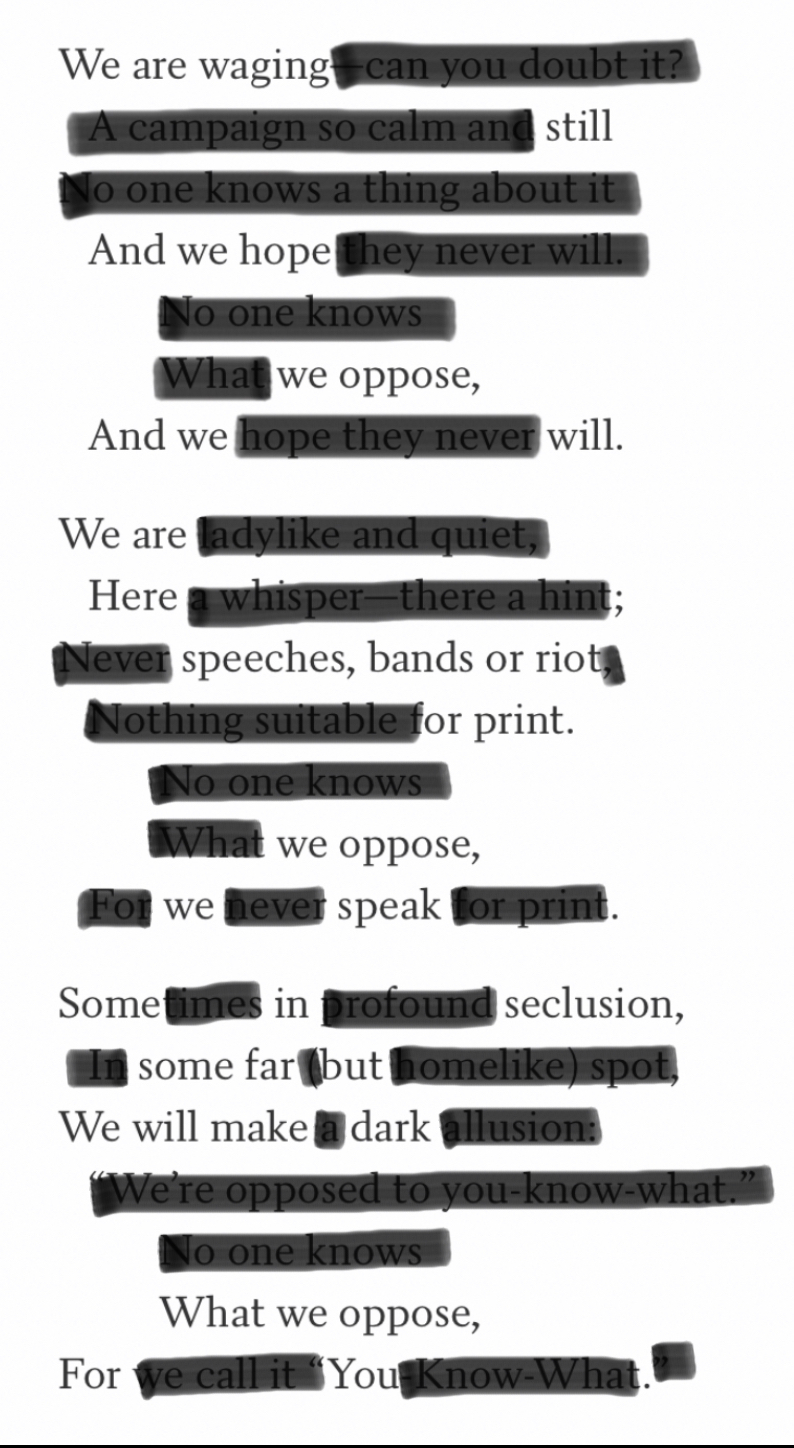
I decided that I wanted to try to reframe the poem as a message from me to her, instead of from her to me. I also decided to try to show the change in culture from the time of writing to now and the difference in ways women are now more heard and seen in society and protest. I wanted to use this technique to show that the impact of her work and others like her, means that the opposite of what the poem says is now true.
Secondly, the Eliminate concept from the SCAMPER method of ideation interested me (Dam and Siang 2020).
I adapted it slightly, in that although I removed words from the original text to create new meaning, I kept her words visible. I did this in order to show how; as in life my privileges are built on her work, my words are also built on and from hers.
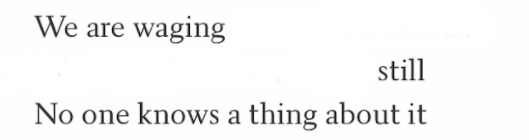
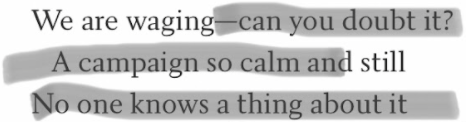
I tried a few different techniques to do this. Removing the words all together – although it looked better aesthetically – didn’t feel in the spirit of the poem or what I was trying to convey in my adaptation. I felt only lightly greying them out meant that the impact was lost and it became more difficult to read. I ended up settling for a dark colour, where the words were not obvious, but readable – echoing faint voices from the past.

Being limited to the words of the previous text made it a challenge but I believe using the technique of elimination in this way effectively conveys the key themes and meaning I drew from the opposite thinking task.
A peer on the course noted that my output was similar to the work of author and poet Austin Kleon who creates blackout poetry. His books on creative work echo the concept of remediation (Grusin and Bolter 2000). In his book Steal Like an Artist, Kleon says: ‘Nothing is original’. Author Jonathan Lethem has a similar view.
‘when they call something “original” nine times out of ten they just don’t know the references or the original sources involved. What a good artist understands is that nothing comes from nowhere. All creative work builds from what came before. Nothing is completely original.’
(2012: 7)
Prior to this course I was unfamiliar with academic writing and this week has this led me to some interesting reflections about the course and the research element of it. The process of creating art has similarities to the process of developing knowledge. When gaining knowledge, reflecting on the thinking that has gone before, searching for and acknowledging your conscious and unconscious references is key to understanding the perspective you develop – and critiquing it.
Knowing as much as possible about where our references come from will better allow us to challenge the assumptions that they may be based on. As all art is referential and derivative, so is all knowledge and creative thinking.
References
BOARD OF INNOVATION. 2021. ‘Opposite Thinking’. Board of Innovation September 2021. Available at: https://www.boardofinnovation.com/tools/opposite-thinking/ [accessed 27th September 2021].
BOLTER, Jay David and Richard GRUSIN. 1999. Remediation: Understanding New Media. Cambridge: MIT Press.
DAM, Friis Riike Friis and TEO Yu Siang. 2020. ‘Learn How to Use the Best Ideation Methods: SCAMPER’. Interaction Design September 2021. Available at: https://www.interaction-design.org/literature/article/learn-how-to-use-the-best-ideation-methods-scamper [accessed 27th September 2021].
KLEON, Austin. 2012. Steal Like an Artist. New York: Workman Publishing.
MILLER, Alice Duer. 1915. ‘A Suggested Campaign Song’. Poets.org. Available at: https://poets.org/poem/suggested-campaign-song [accessed 27th September 2021].
Full list of figures
Figure 1: Alice Duer Miller. ca 1915. Poets.org [online] Available at: https://poets.org/poet/alice-duer-miller [accessed 27th September 2021].
Figure 2: Morwenna GRIFFIN 2021. Testing remediation techniques.
Figure 3. Morwenna GRIFFIN 2021. A message for Alice.
 morwennagriffin.com
One thought on “Activity 2: Artefact Remediation”